Accurately calculating the required heating capacity for a thermal oil heater is a foundational step…
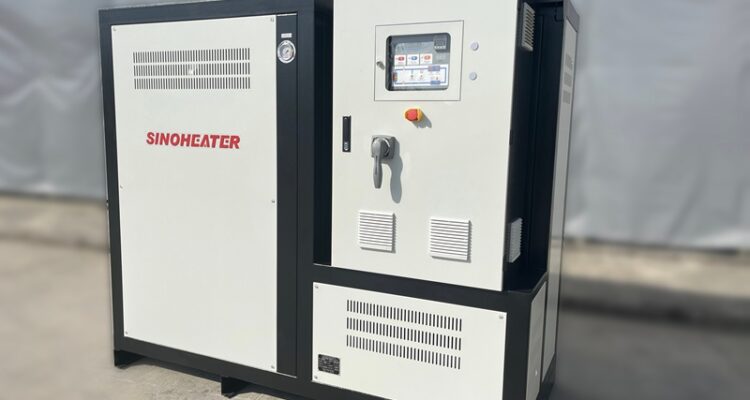
thermal oil heater heat transfer efficiency
Thermal Oil Heater Heat Transfer Efficiency: What Drives Performance and How to Maximize It
Heat transfer efficiency is the single most important metric when evaluating a thermal oil heater. It tells you how effectively your system converts input energy into usable process heat — and where you’re losing money along the way. Unlike steam systems that operate under high pressure, thermal oil heaters deliver heat at low pressure with high temperatures, making efficiency optimization both critical and achievable.
Whether you’re running a chemical reactor, a panel press, or an amine treating unit, understanding heat transfer efficiency determines whether your operation runs lean or bleeds energy.
What Exactly Is Heat Transfer Efficiency in a Thermal Oil Heater?
Heat transfer efficiency (ε) is defined as the ratio of actual heat transferred to the theoretical maximum heat that could be transferred:
ε = Q / Qmax
In practical terms for a thermal oil heater, this means comparing the useful heat output — the energy your hot oil actually delivers to the process — against the total energy input from fuel or electricity. A well-maintained gas or oil-fired thermal oil heater typically achieves a thermal efficiency between 93% and 96% at nameplate conditions. But here’s the catch: that number drops the moment the system starts degrading.
The useful heat output is calculated as:
Useful Heat Output = m_hot_oil × Cp,avg × (T_supply − T_return)
And the heat input:
Heat Input = m_fuel × LHV_fuel
So efficiency boils down to one question: how much of what you burn actually reaches your process?
Key Factors That Kill Your Heat Transfer Efficiency
Thermal Oil Degradation Over Time
This is the silent efficiency killer. Thermal oil oxidizes and cracks as it ages. Viscosity climbs, heat transfer coefficients drop, and you lose 10–15% efficiency before you even notice. The fluid that left the factory with excellent heat transfer properties becomes a sluggish barrier to energy exchange. A fluid with higher viscosity at moderate temperatures (below 350°F bulk temperature) displays a lower heat transfer coefficient — meaning your process takes longer to reach target temperature, even though your fuel bill stays the same.
Synthetic heat transfer fluids hold up better than mineral oils in the 150°C to 260°C range. Above that, up to 300°C, some refined mineral oils narrow the gap. But thermal stability matters more than initial performance — a fluid that degrades slowly protects your efficiency over the entire life of the system.
Excess Air and Combustion Tuning
Running with too much excess air is like leaving your wallet open. Every extra percentage of oxygen in your flue gas carries heat straight out the stack. Reducing excess air through air inlet baffles or low-excess-air burners can improve thermal efficiency by 0.65% to 1.8%. In some amine treating applications, controlling excess air in parallel with hot oil flow rate pushed efficiency gains up to 3.1%.
A modulating burner with a 10:1 turndown ratio can match load within 5–6%, avoiding the energy waste of on-off cycling. Combustion tuning is not optional — it’s the lowest-hanging fruit in efficiency improvement.
Flue Gas Heat Loss
The biggest source of energy loss in any fired thermal oil heater is the flue gas. Hot exhaust leaving at hundreds of degrees represents energy you paid for but never used. This is where heat recovery becomes transformative.
Proven Methods to Boost Heat Transfer Efficiency
Install an Air Preheater for Flue Gas Heat Recovery
An air preheater transfers residual heat from flue gas to combustion air, eliminating the need to heat that air solely through fuel. This single upgrade can boost overall efficiency by up to 7%. The heat exchanger recovers energy that would otherwise vanish up the stack.
One caveat: if you burn sulfur-containing fuels, low-temperature corrosion becomes a real risk. You need to set a minimum metal temperature in the low-temperature zone based on fuel sulfur content, which constrains how low you can push the flue gas outlet temperature. But even with that constraint, waste heat recovery from flue gas remains one of the most effective efficiency measures available.
Increase Convection Section Heat Transfer Area
The radiation section of a thermal oil heater has a practical limit — it’s tied to grate size and burner geometry. Pushing it further yields diminishing returns. The smarter move is increasing the heat transfer area in the convection section, specifically the flue gas side (FGS). This captures more energy from exhaust gases before they leave the system.
Optimize Your Pump System
Pump sizing and piping design directly affect system efficiency. Larger nominal widths minimize pressure loss. Higher cross-section piping does the same. Avoid throttling — it wastes energy. Pre-assembled pump skids with compact design shorten piping distances, reduce pressure drop, and lower the load on your heat transfer medium.
Using a heat transfer fluid with lower viscosity also helps. Less viscous fluids require less pumping power and deliver higher heat transfer coefficients at moderate temperatures. The pump optimization alone can be a meaningful efficiency lever that many operators overlook.
Upgrade Insulation
Ceramic fiber mats outperform traditional mineral fiber insulation by reducing radiant heat loss from the heater shell by 2–3 percentage points. It sounds small, but over the lifetime of a plant, that compounded energy savings is substantial. Generous heater design also reduces the thermal load on the heat transfer medium itself.
How to Measure and Track Efficiency Over Time
Don’t guess — measure. Record inlet and outlet temperatures of your hot oil, track flow rates, and calculate useful heat output using the specific heat capacity of your fluid. Compare that against metered energy input.
For electric thermal oil heaters, total thermal efficiency accounts for three components:
Total Efficiency = (Actual Output Heat − Heat Loss − Oil Heat Loss) / Electrical Energy Input
Where oil heat loss follows: Q = G × Cp × ΔT
And shell heat loss follows: Q = K × A × ΔT
Regular measurement and verification (M&V) lets you spot degradation early — before a 10–15% efficiency loss becomes a crisis. Track your baseline, implement improvements, then re-measure. The data tells you what’s working.
The Bottom Line on Heat Transfer Efficiency
Efficiency in a thermal oil heater is not a fixed number. It’s a living metric shaped by fluid condition, combustion tuning, heat recovery, and system design. The gap between nameplate efficiency (93–96%) and real-world performance is where most plants lose money — and where the biggest gains are waiting. Start with combustion tuning and flue gas recovery, maintain your fluid, optimize your pumps, and measure everything. That’s how you keep efficiency high and keep it there.
Related Posts