Accurately calculating the required heating capacity for a thermal oil heater is a foundational step…
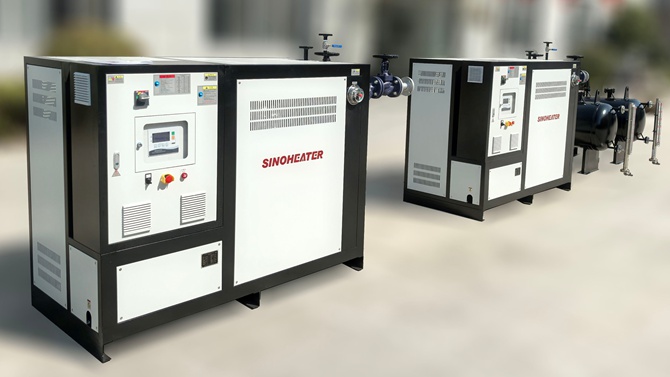
thermal oil heater horizontal type
Thermal Oil Heater Horizontal Type: Why the Classic Layout Still Works
The horizontal thermal oil heater is the oldest and most widely used configuration in industrial heating. It has been around for decades, and for good reason. The layout is simple, the tube cleaning is straightforward, and the firebox design is well understood. It is not the newest thing on the market. But new does not always mean better. For many applications, the horizontal type remains the most practical, most serviceable, and most reliable choice available.
What Makes a Horizontal Thermal Oil Heater Different
In a horizontal heater, the tubes run lengthwise through a wide, rectangular firebox. The burner sits at one end of the firebox, and the flame sweeps across the tube bank horizontally. Hot flue gas travels along the tubes, transferring heat through the tube walls into the thermal oil flowing inside.
This is different from a vertical heater, where tubes stack on top of each other and the flame rises upward through the tube bank. Each layout has its strengths. The horizontal type wins on maintenance access, tube cleaning, and large-capacity applications. The vertical type wins on footprint. But for sheer versatility and proven reliability, horizontal heaters dominate the market.
The firebox in a horizontal heater is usually water-cooled on the front and rear walls. These water-cooled membrane walls protect the refractory lining and absorb radiant heat from the flame. The side walls are typically insulated refractory. The roof of the firebox is also refractory-lined and handles the hottest zone where the flame impinges directly on the tubes.
Tube Arrangement and Heat Transfer
Single Pass Versus Multi Pass Configurations
Horizontal heaters can be single pass or multi pass. In a single pass design, the oil enters one end of the heater, flows straight through all the tubes, and exits the other end. This is the simplest layout and it works well for moderate temperature rises.
Multi pass designs force the oil to flow back and forth through the tube bank multiple times. A two-pass heater sends the oil through half the tubes, turns it around with a U-bend or return header, and sends it back through the other half. A four-pass heater does this twice. More passes mean more tube surface in contact with the oil, which means better heat transfer for a given firebox size.
The trade-off is pressure drop. Every time the oil changes direction, it loses pressure. A four-pass heater has significantly higher pressure drop than a single pass heater. The pump must be sized to overcome that drop, which means a larger pump, more electricity, and more wear on the mechanical seal. For most applications, a two-pass design hits the sweet spot between heat transfer efficiency and acceptable pressure drop.
Tube Bundle Layout in the Firebox
The tubes in a horizontal heater are arranged in rows across the width of the firebox. The number of rows depends on the required heating surface. More rows mean more surface area, which means more heat transfer capacity. But more rows also mean the flue gas has to travel further to reach the back of the tube bank, which reduces the temperature difference between the gas and the tubes at the rear.
This is why tube arrangement matters. The front rows get the hottest gas and do most of the work. The rear rows get cooler gas and contribute less. A well-designed tube layout accounts for this by spacing the rows so that each row sees roughly the same heat flux. Tight spacing at the front and wider spacing at the rear is a common approach.
The tubes themselves are usually seamless carbon steel, sized between 2 inches and 6 inches in diameter. Wall thickness depends on the operating pressure and temperature. For most thermal oil service, schedule 40 or schedule 80 pipe is standard. The tubes are welded to tube sheets at both ends of the firebox. The tube sheets are thick, drilled plates that hold the tubes in place and seal the firebox from the oil side.
Burner Integration in Horizontal Heaters
Burner Placement and Flame Direction
The burner in a horizontal heater mounts on the front wall of the firebox, usually at the bottom. The flame projects horizontally into the tube bank. This gives the flame a long path across the tubes, which improves heat transfer compared to a short, concentrated flame.
Some designs use side-mounted burners instead of front-mounted ones. A side burner sits on one of the long walls of the firebox and fires across the tube bank from the side. This shortens the flame path but gives a more even heat distribution across the width of the tube bank. Side-mounted burners are common in larger heaters where a single front burner cannot cover the full width of the tube bank.
The flame must not impinge directly on any tube. Direct impingement creates a hot spot on the tube wall, which accelerates tube metal fatigue and can cause premature failure. The flame should sweep across the tubes, not hit them head-on. Burner nozzle selection and flame shaping are critical for this.
Air and Fuel Delivery
Horizontal heaters typically use forced draft burners. A fan pushes combustion air into the firebox at a controlled rate. This gives precise control over the air-to-fuel ratio, which is the single biggest factor in combustion efficiency and emissions.
The air fan is usually mounted on the burner itself or on the firebox wall near the burner. It draws air from outside the heater room through a duct. That duct must be sized correctly. An undersized duct starves the burner of air, which causes incomplete combustion, soot, and CO. An oversized duct lets in too much air, which cools the flame and carries heat up the stack.
Fuel delivery is through a pressure-jet or air-blast nozzle. Pressure-jet nozzles use the fuel pressure to atomize the fuel. They are simple and reliable for smaller heaters. Air-blast nozzles use compressed air to break up the fuel spray. They handle higher capacities and give better flame control. For horizontal heaters above 1 MW thermal output, air-blast nozzles are the standard.
Advantages of the Horizontal Layout
Easier Tube Cleaning and Inspection
This is the biggest advantage of the horizontal type. The tubes run straight through the firebox. You can pull a mechanical brush or a high-pressure water jet through each tube from end to end. The cleaning tool runs the full length of the tube without hitting any bends or turns.
In a vertical heater with coiled tubes or multiple passes, cleaning is much harder. The tools have to navigate bends, and some areas are impossible to reach without disassembling the heater. A horizontal heater lets you clean every tube without taking the heater apart. For processes where tube fouling is a concern — and it is in most diesel or biomass fired systems — this matters a lot.
Tube inspection is also easier. You can run a borescope or an ultrasonic thickness gauge through each tube in a horizontal heater. In a vertical heater, inspecting the upper tubes requires working at height inside the firebox, which is slower and more dangerous.
Better Flue Gas Flow Management
The horizontal layout gives the flue gas a long, controlled path through the tube bank. This means the gas gives up more of its heat before it reaches the stack. A well-designed horizontal heater can achieve stack temperatures below 200°C, which is excellent efficiency.
The flue gas path is also easier to control. Baffles can be installed inside the firebox to direct the gas across the tubes in a specific pattern. This ensures even heat distribution and prevents gas from short-circuiting through the firebox without contacting the tubes.
In a vertical heater, the flue gas rises straight up. It is harder to direct the gas across the tubes evenly, and some tubes may get more heat than others. This uneven heating causes uneven tube wear and reduces overall heater life.
Scalability to Large Capacities
Horizontal heaters scale up more easily than vertical designs. If you need more heating surface, you add more rows of tubes and make the firebox longer. The burner can be upgraded or duplicated. The piping stays simple. The skid or foundation just gets longer.
Vertical heaters hit a practical limit when the firebox gets too tall. The tubes become too long, the flame cannot reach the top of the tube bank effectively, and the structural load on the frame becomes excessive. For large systems above 3 MW, the horizontal type is almost always the better choice.
Challenges With Horizontal Heaters
Footprint Is Larger
The obvious downside. A horizontal heater is wide and long. It takes up more floor space than a vertical heater of the same capacity. If you are working in a tight plant room or on a crowded skid, the horizontal layout may not fit.
This is why skid designers sometimes choose vertical heaters for compact applications. But if you have the space, the horizontal type gives you better performance and easier maintenance. Space is a constraint you can sometimes solve with better layout planning. A heater that is hard to service is a worse problem than a heater that takes up more room.
Thermal Expansion Management
A long horizontal firebox means long tubes, and long tubes mean significant thermal growth. A 6-meter tube running at 300°C can grow 10mm or more from cold to hot. That growth has to go somewhere.
Expansion loops or offset legs are mandatory on the inlet and outlet piping. The tubes themselves expand inside the firebox, but the tube sheets are rigid. The tubes must be free to grow axially without stressing the tube sheet welds. This is handled by leaving one tube sheet fixed and allowing the other to float, or by using expansion joints in the piping.
If thermal expansion is not managed properly, the tubes will buckle, the tube sheet welds will crack, and the heater will leak. This is not a theoretical risk. It happens regularly on horizontal heaters that were installed without proper expansion provisions.
Heavy Weight and Structural Support
A horizontal heater is heavy. The firebox, the tube bank, the water-cooled walls, the burner — it all adds up. A large horizontal heater can weigh several tons. The skid frame or foundation must be designed for that load.
The weight is concentrated along the length of the heater, which creates a bending load on the skid frame. The frame must be stiff enough to resist deflection under that load. A weak frame flexes, which misaligns the pipe connections and stresses the tube sheet welds. Use a box-section frame with cross bracing, not a simple I-beam frame.
When to Choose Horizontal Over Vertical
Go horizontal when you have the space. If your plant room can accommodate a longer, wider heater, the horizontal type gives you better heat transfer, easier maintenance, and more reliable tube cleaning.
Go horizontal when tube fouling is a concern. Diesel fired, biomass fired, and heavy oil systems all foul tubes faster than gas fired systems. A horizontal heater lets you clean those tubes quickly and thoroughly without disassembly.
Go horizontal when you need large capacity. Above 2 MW thermal output, the horizontal layout is more practical and more economical than vertical.
Go vertical only when space is the overriding constraint. If you cannot fit a horizontal heater, then vertical is the alternative. But do not choose vertical because it looks modern. Choose it because you have no other option.
Installation Tips for Horizontal Heaters
The heater must sit level on the skid or foundation. An unlevel heater causes the expansion tank to sit off-center, which affects venting and oil level readings. It also creates uneven thermal stress in the tubes. Use a machinist’s level across the full length of the skid. Shim where necessary. Do not rely on the foundation being level — check it yourself.
The burner must have clear access to combustion air. Do not place the heater against a wall with no air gap. The burner needs at least 1 meter of clear space on the air intake side. If the air intake is blocked, the burner runs rich, produces soot, and wastes fuel.
Pipe connections to the heater should use flexible joints. The heater and the process piping will expand at different rates. A rigid connection between them transfers stress into both systems. Use bellows or expansion joints on every connection.
The water-cooled walls on the front and rear of the firebox need a reliable water supply. If the cooling water fails, the membrane walls overheat and can rupture. Install a low-water cutoff on the cooling water system and interlock it with the burner. No water, no fire. This is not optional.
Maintenance Rhythm for Horizontal Heaters
Check the burner nozzle every 500 operating hours. Clean it or replace it if the spray pattern looks uneven. A bad nozzle causes incomplete combustion, soot, and tube fouling.
Inspect tubes every 6 months. Look for discoloration, scaling, or wall thinning. Use an ultrasonic thickness gauge to measure remaining wall thickness. Replace any tube that is below the minimum allowable thickness.
Check flue gas temperature monthly. A rising stack temperature means tubes are fouling. Schedule a cleaning before the temperature climbs more than 20°C above baseline.
Drain the expansion tank and check the oil level weekly. Low oil level means air in the system, which means pump cavitation and hot spots.
Test the high-limit temperature protection every quarter. Simulate a high-temperature condition and verify that the burner shuts down. Do not skip this. A failed high limit is a direct path to tube failure.
The horizontal thermal oil heater is not flashy. It does not have the small footprint of a vertical design or the novelty of an electric system. But it works. It has worked for decades, and it will keep working for decades more. The layout is proven, the maintenance is straightforward, and the performance is dependable. If space allows, the horizontal type is the default choice for a reason. It is the layout that gets the job done with the fewest surprises.
Related Posts