Accurately calculating the required heating capacity for a thermal oil heater is a foundational step…
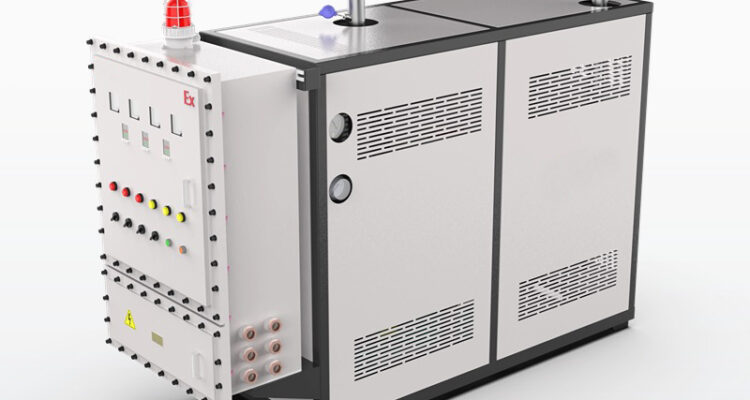
thermal oil heater biomass fired system
Biomass Fired Thermal Oil Heater System: The Real Story Behind Green Industrial Heating
Biomass fired thermal oil heaters sound like the perfect solution on paper. Renewable fuel, lower carbon footprint, and in some cases fuel that costs almost nothing. The reality is messier. Biomass combustion introduces a whole set of challenges that gas and diesel systems simply do not have. Ash handling, fuel variability, slagging, corrosion — these are not minor inconveniences. They are design-level decisions that determine whether your biomass thermal oil heater runs for years or falls apart in months.
How Biomass Fired Thermal Oil Heating Actually Works
The basic loop is the same as any thermal oil system. Fuel burns in a combustion chamber, heat transfers to tubes carrying thermal oil, and the hot oil circulates to your process. The difference is entirely in the firebox.
Biomass fuels — wood pellets, wood chips, olive pomace, rice husks, coconut shells — burn very differently from gas or diesel. They have higher moisture content, lower calorific value per kilogram, and they produce ash. A lot of ash. That ash does not just disappear. It melts at certain temperatures, sticks to tube surfaces, and builds up layer by layer until heat transfer drops and tube metal overheats.
The burner for a biomass fired thermal oil heater is usually a grate-fired or suspension-fired type. Grate burners sit fuel on a moving grate where air is blown up from below. They handle larger fuel particles like wood chips well. Suspension burners pulverize the fuel and blow it into the combustion chamber, similar to a coal pulverizer. They work better with fine fuels like wood pellets.
The firebox itself must be designed for biomass specifically. Water-cooled membrane walls or refractory-lined chambers are common. The refractory must handle thermal cycling because biomass fires do not burn as steadily as gas flames. You get temperature swings, and those swings crack refractory if it is not the right grade.
Fuel Types and Their Impact on System Design
Not all biomass is the same, and treating it as if it is will cost you.
Wood pellets are the most consistent biomass fuel for thermal oil heaters. They have low moisture content — usually under 10% — and a fairly uniform calorific value around 17 to 19 MJ/kg. They flow easily through feeding systems and produce relatively little ash. Pellet-fired systems are the closest to gas fired systems in terms of operational stability.
Wood chips are cheaper but much harder to manage. Moisture content can be 30% to 50% depending on storage conditions. High moisture kills combustion efficiency because energy goes into evaporating water instead of heating oil. You need a dry storage area and a good feeding system. Chips also produce more ash and more variable flame behavior.
Agricultural residues like rice husks, olive pomace, and coconut shells are common in regions where those crops are abundant. Rice husks have high silica content, which creates slagging problems. The silica melts and fuses into a hard glassy layer on tube surfaces that is extremely difficult to remove. Olive pomace has high alkali content, which accelerates corrosion. Coconut shells burn hot and clean but are expensive to transport.
The fuel you choose dictates your burner type, your ash handling system, your tube cleaning schedule, and your maintenance budget. There is no universal biomass solution.
Ash Handling and Slagging: The Headache Nobody Warns You About
Ash is the defining problem of biomass fired thermal oil heaters. In a gas fired system, you might clean tubes once a year. In a biomass system, you might do it every few weeks depending on fuel quality.
Slagging happens when ash melts and adheres to tube surfaces. The melting point depends on the ash composition. Wood ash with high calcium and potassium content melts at relatively low temperatures — sometimes as low as 800°C. If your tube metal temperature runs above that, slag forms. Once it forms, it insulates the tube. The metal underneath gets hotter, which melts more ash, which builds up further. It is a runaway process.
The way to fight slagging is to keep tube metal temperatures below the ash fusion temperature. This sounds simple but it constrains your entire operating envelope. You may not be able to run the oil as hot as you want, which limits your process capability.
Fly ash — the fine particulate that rides up with the flue gas — is a different problem. It does not stick to tubes as much, but it erodes them. Fly ash particles hit tube surfaces at high velocity and wear through the metal over time. This is especially bad at bends and elbows in the flue gas path. Use abrasion-resistant tube materials or install sacrificial wear plates in high-velocity zones.
Bottom ash from grate burners drops into a hopper below the grate. It must be removed regularly — daily or even more often for high-capacity systems. If ash builds up on the grate, it blocks airflow and kills combustion. Automated ash removal systems exist, but they add cost and complexity.
Combustion Control Is Harder Than You Think
Controlling a biomass fire is not like controlling a gas flame. Gas burns instantly and predictably. Biomass burns in stages — drying, devolatilization, char combustion — and each stage behaves differently.
Air supply must be carefully managed. Too little air and you get incomplete combustion, high CO, and excess tar in the flue gas. Too much air and you cool the firebox, reduce efficiency, and carry more heat up the stack. The sweet spot is narrow and shifts as fuel moisture and quality change.
Most biomass fired thermal oil heaters use under-fire air and over-fire air separately. Under-fire air supports the initial combustion on the grate. Over-fire air completes the burnout of volatiles above the fuel bed. Balancing these two streams is a tuning exercise that takes time and patience.
Fuel feeding rate must match the heat demand. If you dump too much fuel into the firebox, temperatures spike, slagging accelerates, and emissions spike. If you feed too little, the fire dies down and oil temperature drops. A responsive fuel feeding system with good control logic is essential. Simple on/off feeding does not work well for thermal oil applications where temperature stability matters.
Emissions and What You Need to Worry About
Biomass is called renewable, but burning it still produces emissions that regulators care about.
Particulate matter is the biggest concern. Biomass combustion produces fine particles that are visible as smoke if combustion is poor. Even with good combustion, PM emissions are higher than gas. You will need a particulate control device — a cyclone separator at minimum, and a baghouse or electrostatic precipitator for stricter limits.
NOx from biomass is generally lower than from gas or diesel because biomass flames burn at lower peak temperatures. But it is not zero. If you use over-fire air or staged combustion to reduce PM, you can inadvertently increase NOx. It is a trade-off you have to manage.
CO and volatile organic compounds (VOCs) are signs of incomplete combustion. They spike during startup, shutdown, and load changes. A well-tuned system keeps these low during steady operation, but transient periods are always messy.
Tar and condensable organic compounds are unique to biomass. When flue gas cools below the dew point, tars condense into a sticky black liquid that clogs ducts, damages fans, and fouls heat exchangers. Keep flue gas temperatures above the dew point until it reaches the particulate control device. Insulate the flue gas path if necessary.
Heater Tube Challenges in Biomass Fired Systems
Tubes in a biomass fired thermal oil heater face a harsher environment than in any other fuel type. The combination of ash deposition, slagging, corrosion from alkali compounds, and thermal cycling takes a toll.
Corrosion is insidious. Alkali metals in biomass ash — potassium, sodium — react with tube metal at high temperatures. This is called high-temperature corrosion, and it thins tube walls from the outside. You cannot see it without cutting the tube open. By the time you notice a problem, the tube may be close to failure.
Use tube materials that resist alkali corrosion. Higher alloy steels with chromium and nickel content perform better than plain carbon steel. The cost difference is significant, but replacing a failed tube in a biomass system is far more expensive than using the right alloy from the start.
Tube cleaning intervals are much shorter. Where a gas fired system might go 12 to 24 months between cleanings, a biomass system may need cleaning every 4 to 8 weeks. Plan for this. If your process cannot tolerate that downtime, biomass may not be practical.
Safety Systems You Cannot Skip
Biomass fired thermal oil heaters carry fire and explosion risks that are different from gas or diesel.
Backfire is a real danger. If the fuel feeding system jams and too much fuel accumulates in the firebox, the next ignition can cause a pressure wave that blows out the firebox doors. Install pressure relief vents on the firebox and a fuel feed interlock that shuts off fuel if the firebox pressure exceeds a setpoint.
Dust explosion risk exists in the fuel handling area. Fine biomass dust — especially from wood pellets — is combustible. If it accumulates in a confined space and finds an ignition source, it explodes. Keep fuel storage and handling areas clean, well-ventilated, and free of dust accumulation.
The circulating pump must never stop while the heater is hot. This rule applies to all thermal oil systems, but it is even more critical with biomass. Biomass fires are harder to control than gas flames. If the pump stops and oil overheats, the oil can crack and generate gas pressure inside the tubes. Combined with an uncontrolled biomass fire, the consequences are severe.
High limit temperature protection on the oil outlet must be independent of the burner control system. If the burner control fails and keeps firing while the oil is already at maximum temperature, the independent high limit must shut the burner down. This is not redundant — it is essential.
When Biomass Makes Sense for Thermal Oil Heating
Biomass fired thermal oil heaters work best when fuel is cheap and abundant locally. A sawmill with a waste wood problem, an olive oil mill with tons of pomace, a rice mill with husks piling up — these are ideal scenarios. The fuel cost is near zero, and you are solving a waste disposal problem at the same time.
They also make sense when carbon reduction targets are driving your fuel choice and you have the operational capacity to manage the extra complexity. Biomass is not a drop-in replacement for gas. It demands more attention, more maintenance, and more expertise.
Biomass does not make sense if you need precise temperature control, if you cannot tolerate frequent tube cleaning, or if fuel quality is inconsistent. A biomass system that runs on variable fuel with no quality control will give you variable performance, and variable performance in a thermal oil loop is a recipe for process upsets.
The bottom line is this: biomass fired thermal oil heating works, but it works differently. The fuel is free but the system is not. Budget for the burner, the ash handling, the tube upgrades, the emissions control, and the extra maintenance. If you do that, you get a heating system that runs on renewable fuel and keeps your process running. If you skip any of those pieces, you get a system that burns through money and tubes at the same time.
Related Posts