Asphalt plant operations rely on consistent, reliable high-temperature heat to keep aggregate drying, bitumen storage,…

thermal oil heater expansion tank function
Thermal Oil Heater Expansion Tank Function: Why Your System Cannot Run Without One
Every thermal oil heating system has one component that looks simple but does heavy lifting: the expansion tank. It sits quietly on top of the system, often overlooked during daily operations, yet without it, your entire loop would fail — fast. The expansion tank manages the volume changes that happen when heat transfer fluid heats up and cools down. Ignore it, and you risk overpressure, fluid loss, pump cavitation, and in the worst case, a catastrophic system shutdown.
Understanding what the expansion tank actually does — and why it matters — separates operators who run trouble-free plants from those who spend weekends chasing leaks.
What Happens to Thermal Oil When Temperature Changes
Thermal oil is not water. It does not behave the same way under heat. Mineral-based and synthetic heat transfer fluids expand significantly as temperature rises. At operating temperatures between 200°C and 350°C, the volumetric expansion can reach 10% to 15% of the total system volume. That is a massive amount of fluid that has nowhere to go unless you plan for it.
When the system heats up from a cold start to full operating temperature, the oil expands. When it cools down during shutdown, it contracts. This cyclic expansion and contraction happens every single time the system cycles. Without a dedicated space to absorb that expanding volume, pressure spikes build up inside the heater, piping, and vessels. The expansion tank exists to give that fluid somewhere safe to go.
Core Functions of the Expansion Tank in a Thermal Oil System
Accommodating Volumetric Expansion
This is the primary job. The expansion tank provides a cushion of volume — usually filled with nitrogen on the gas side — that absorbs the extra fluid when the oil expands. As the fluid heats up and pushes into the tank, it compresses the nitrogen blanket. When the system cools, the nitrogen pushes the fluid back into the loop. This back-and-forth keeps system pressure within a safe, controlled range.
The tank is typically sized to handle the total expansion volume from the lowest expected temperature (often ambient or startup temperature) to the maximum operating temperature. Undersizing it means the system has no room to breathe, and pressure relief valves start popping — wasting fluid and creating safety hazards.
Maintaining System Pressure Stability
A thermal oil system must stay pressurized. Not as high as a steam system, but enough to keep the oil in liquid phase at elevated temperatures and to prevent air from being drawn into the loop. The expansion tank acts as a pressure buffer. By maintaining a stable gas cushion pressure, it ensures the system never goes below the minimum required pressure or above the maximum allowable working pressure.
When the nitrogen charge in the tank is correct, the system pressure at operating temperature should sit comfortably within the design range — typically 1 to 3 bar gauge, depending on the system. If pressure keeps drifting, the expansion tank or its nitrogen blanket is often the culprit.
Preventing Air Ingress and Oxidation
Here is a function that many operators miss entirely. A properly maintained expansion tank keeps the entire system sealed from the atmosphere. The nitrogen blanket acts as an inert barrier. No air gets in, which means the thermal oil does not oxidize at the surface.
Oxidation is the number one cause of thermal oil degradation. It starts at the oil-air interface, which is exactly where the expansion tank connects to the system. If the tank is open to atmosphere — or if the nitrogen blanket has leaked out — oxygen dissolves into the hot oil and accelerates sludge formation, viscosity increase, and acid number rise. A sealed, nitrogen-blanketed expansion tank is not just a pressure device. It is your first line of defense against fluid breakdown.
How the Expansion Tank Is Actually Connected to the System
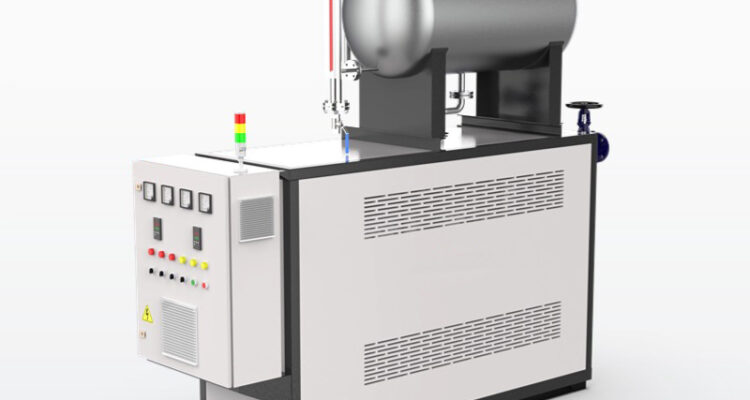
The expansion tank connects to the hot oil loop at the highest point of the system — usually on top of the heater or on the main supply line near the heater outlet. This placement is intentional. Hot oil rises, and the tank needs to see the hottest fluid in the system to accurately manage expansion volume. If you pipe it into a cold leg, the volume readings will be wrong and the tank will not function as designed.
The connection pipe should be as short and straight as possible. Long runs or restrictions create pressure drop between the system and the tank, which delays pressure equalization. In fast-cycling systems, this delay can cause pressure spikes that trip safety devices.
The tank itself has two chambers separated by a bladder or a diaphragm. One side holds the thermal oil. The other side holds nitrogen. As oil expands into the tank, it pushes against the bladder, compressing the nitrogen. The bladder prevents the oil and gas from mixing — which is critical, because if they mix, the nitrogen dissolves into the oil and you lose your inert blanket.
Common Problems That Reveal a Failing Expansion Tank
Nitrogen Loss and Pressure Drift
Nitrogen leaks out slowly over time. It happens through valve stems, bladder permeation, or micro-leaks at fittings. When the nitrogen charge drops, the tank loses its ability to absorb expansion. You will notice system pressure climbing at operating temperature, then dropping too low during cool-down. The relief valve may start lifting. The first thing to check is the nitrogen pre-charge pressure — it should be set to the system’s cold-fill pressure, usually around 0.5 to 1.0 bar gauge.
Bladder Failure
If the bladder or diaphragm ruptures, oil and nitrogen mix. The tank becomes waterlogged — or rather, oil-logged. It can no longer compress, so expansion has nowhere to go. Pressure spikes follow. In some cases, the tank fills completely with oil and acts as a dead weight. Replacing the bladder is cheaper than replacing the tank, but it requires shutting the system down and draining the tank, which most operators avoid until something breaks.
Wrong Tank Sizing
A tank that is too small for the system volume will reach its limit during normal operation. This shows up as frequent relief valve actuation or pressure gauge readings that climb to the red zone every cycle. A tank that is too large is not dangerous, but it means the nitrogen charge is spread thin, and pressure control becomes sluggish. Sizing should be based on total system oil volume, temperature range, and the fluid’s expansion coefficient — not guessed.
Why You Should Inspect the Expansion Tank Regularly
Most maintenance schedules focus on the heater, the burner, and the pump. The expansion tank gets checked maybe once a year, if at all. That is a mistake. A quick monthly check of the nitrogen pre-charge pressure takes five minutes and can prevent a major incident. Check the tank for external corrosion, inspect the nitrogen valve for leaks, and verify that the pressure gauge reads correctly.
If your system uses an open expansion tank — which some older installations still do — you are fighting a losing battle against oxidation. Open tanks let air in every time the system cools and contracts. The oil surface is exposed to atmosphere 24 hours a day. If you are still running an open tank, the upgrade to a closed, nitrogen-blanketed system is one of the highest-return maintenance actions you can take. It protects your fluid, stabilizes your pressure, and keeps your relief valves from doing their job.
Related Posts