Accurately calculating the required heating capacity for a thermal oil heater is a foundational step…
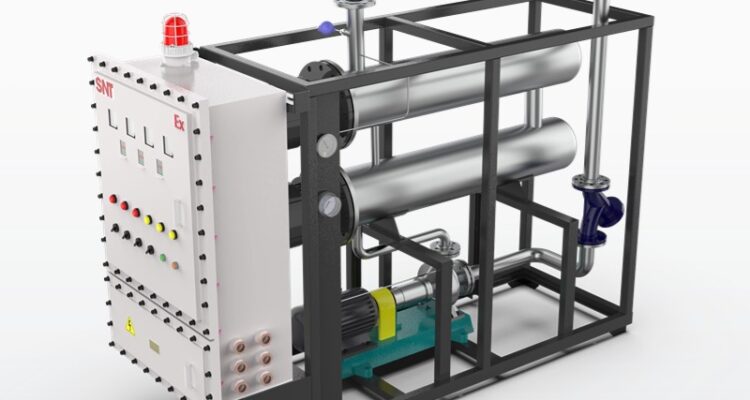
thermal oil heater flue gas temperature
Thermal Oil Heater Flue Gas Temperature: What You Need to Know
If you operate or maintain a thermal oil heater, flue gas temperature is one of the most telling numbers on your dashboard. It tells you how efficiently your system is burning fuel, how clean your combustion is, and whether your equipment is headed for trouble. Ignore it long enough and you are looking at wasted fuel, damaged tubes, or worse.
What Is a Normal Flue Gas Temperature Range
Most thermal oil heaters — whether they run on gas, oil, or solid fuel — produce flue gas temperatures somewhere between 250°C and 400°C at the stack outlet when running at full load. For gas-fired systems, the range is typically lower, around 200°C to 300°C. Oil-fired units tend to sit higher, closer to 300°C to 400°C. Coal or biomass-fired heaters can push even further, sometimes exceeding 450°C.
These numbers are not random. They reflect the combustion efficiency of the burner and the heat transfer performance of the coil or tube bundle inside the furnace. When everything is working as designed, the flue gas leaves at the highest temperature that still allows safe operation of downstream equipment like economizers or air preheaters.
Why Flue Gas Temperature Matters So Much
It Directly Reflects Combustion Efficiency
Here is the simplest way to think about it: the hotter your flue gas, the more heat you are sending up the chimney instead of into your thermal oil. Every degree above the optimal range is wasted energy. A flue gas temperature that is 50°C higher than it should be can mean a 3 to 5 percent drop in overall thermal efficiency. Over a full heating season, that adds up to serious fuel costs.
A properly tuned burner with good air-to-fuel ratio will keep flue gas temperature in the sweet spot — high enough to avoid condensation corrosion, but low enough to maximize heat recovery.
It Tells You When Tubes Are Fouling
This is the one most operators miss. When soot, scale, or carbon deposits build up on the inside of your heater tubes, heat transfer drops. The thermal oil does not absorb as much energy, so the flue gas stays hotter than it should. A gradual rise in flue gas temperature over weeks or months — with no change in fuel input or load — is almost always a sign of tube fouling.
Catch it early and you can schedule a cleaning. Ignore it and the tubes overheat, the thermal oil degrades, and you end up with a forced shutdown.
What Causes Abnormally High Flue Gas Temperature
Excess Air in Combustion
Too much air in the burner is the most common culprit. When you flood the combustion chamber with air, the flame temperature drops and more heat gets carried out with the flue gas. The excess air also cools the flame, which reduces radiant heat transfer to the tubes. The result? Higher stack temperature, lower efficiency, and more fuel burned for the same output.
Most gas-fired heaters run best with 5 to 10 percent excess air. Oil-fired systems typically need 10 to 15 percent. Go above that and you start wasting energy fast.
Burner Misalignment or Wear
A burner that is not properly aligned or has worn nozzles will not atomize fuel correctly. Poor atomization means incomplete combustion, which produces more flue gas volume at a higher temperature. You will see this as a yellow or flickering flame instead of a clean blue one. Fix the burner, and the flue gas temperature drops back to normal within hours.
Scale and Deposits on Heat Transfer Surfaces
This ties back to tube fouling, but it is worth calling out separately. Scale on the outside of tubes — from hard water or contaminated thermal oil — acts as insulation. Heat cannot transfer efficiently from the flue gas to the oil, so the gas leaves hotter than it should. This is a slow killer. You will not notice it until efficiency has dropped significantly or a tube has failed.
What Causes Abnormally Low Flue Gas Temperature
Too Little Excess Air
Running a burner with insufficient air causes incomplete combustion. The flue gas temperature drops, but now you have carbon monoxide and soot in the exhaust. This is dangerous. Low flue gas temperature combined with a dark, smoky exhaust means your burner is starving for air. Adjust it immediately.
Economizer or Air Preheater Issues
If your system uses an economizer or air preheater to recover waste heat, a malfunction in those components can cause flue gas temperature to read lower than expected. A blocked economizer tube or a failed damper will throw off your readings. The temperature itself might be fine — your measurement point is just wrong.
How to Monitor Flue Gas Temperature Properly
Place the Sensor at the Right Spot
The thermocouple or temperature sensor should be installed at least 1.5 meters above the burner and at least 0.5 meters away from any wall or bend in the flue. Too close to the burner and you get a reading that is too high. Too close to the economizer and you get a reading that is too low. The goal is to capture the true average flue gas temperature before it enters any heat recovery device.
Track Trends, Not Just Numbers
A single flue gas temperature reading tells you almost nothing. What matters is the trend over time. Log the temperature daily at the same load and fuel rate. If it climbs steadily over two weeks, you have a fouling problem. If it spikes suddenly, check the burner and air supply. If it drops sharply, check for air leaks or economizer blockage.
Flue Gas Temperature and Condensation Risk
One thing operators forget: if flue gas temperature drops too low — below the dew point of the combustion products — you get condensation inside the flue. For natural gas, the dew point is around 55°C. For oil, it is closer to 80°C to 100°C depending on sulfur content. Condensation mixes with sulfur compounds and creates sulfuric acid, which eats through the flue, the stack, and the economizer from the inside.
This is why most operators keep flue gas temperature above 150°C as a safety margin. It is not about efficiency at that point — it is about keeping the metal dry.
The Connection Between Flue Gas Temperature and Thermal Oil Degradation
When flue gas temperature runs high, the thermal oil near the tube walls gets overheated. Thermal oil has a maximum film temperature — the highest temperature the oil can reach at the tube surface before it starts breaking down. Exceed that limit and the oil cracks, forming sludge, varnish, and acidic byproducts. These contaminants circulate through the system, coat every surface, and accelerate fouling even further.
It is a vicious cycle. High flue gas temperature degrades the oil, degraded oil fouls the tubes, fouled tubes raise the flue gas temperature even higher. Break the cycle by keeping flue gas temperature in check, and your thermal oil lasts significantly longer.
Related Posts