Accurately calculating the required heating capacity for a thermal oil heater is a foundational step…
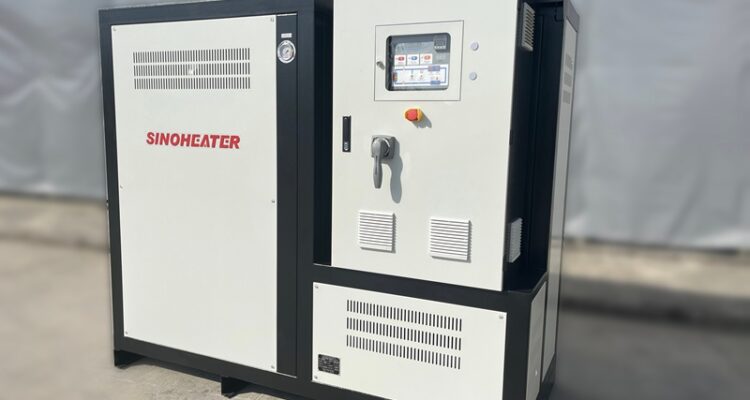
thermal oil heater gas fired system
Gas Fired Thermal Oil Heater System: Everything You Need to Know Before You Buy
Gas fired thermal oil heaters dominate industrial heating in regions with pipeline access. They burn clean, respond fast to load changes, and demand far less maintenance than diesel or oil fired alternatives. But “clean” does not mean “no attention required.” A gas fired system still needs proper combustion control, regular inspection, and careful integration with the rest of your process. Getting the setup wrong does not always cause an immediate failure. It causes a slow one — efficiency drops, tubes foul, emissions creep up, and eventually you are spending more on repairs than you saved on fuel.
How a Gas Fired Thermal Oil Heater Works
The concept is simple. Natural gas enters the burner, mixes with combustion air, and ignites inside a firebox. The flame heats a bank of coils or tubes, and thermal oil flows through those tubes, absorbing heat. The hot oil circulates to your process equipment, returns cooler, gets reheated, and the loop continues.
What makes gas different from liquid fuels is how the flame behaves. Natural gas mixes with air almost instantly. The flame is short, stable, and easy to shape. This means the heat distribution across the tube surfaces is more uniform compared to diesel, where the flame can be longer and harder to control. Uniform heat means fewer hot spots, less tube stress, and longer heater life.
Most gas fired thermal oil heaters use forced draft burners. A fan pushes air into the combustion chamber at a controlled rate. This gives you precise control over the air-to-fuel ratio, which is the single most important variable in combustion efficiency. Too little air and you get carbon monoxide and soot. Too much air and you waste energy heating air that just goes up the stack.
The burner modulation range matters too. A good gas burner can modulate from 30% to 100% of its rated capacity. This lets the heater match your process load without cycling on and off constantly. Cycling kills efficiency and stresses components. Modulation keeps the system running smoothly.
Burner Types and What They Mean for Your System
Not all gas burners are the same, and the type you choose affects performance, emissions, and maintenance.
Atmospheric burners draw combustion air from the surrounding room. They are simple, reliable, and cheap. But they are limited in capacity and do not handle low pressure gas well. For small thermal oil heaters under 500 kW, atmospheric burners work fine. For anything larger, you want forced draft.
Forced draft burners use a fan to push air into the burner. They handle a wider range of gas pressures and deliver better flame stability. These are the standard on mid-size and large thermal oil heaters. The fan also gives you better control over excess air, which directly impacts efficiency and emissions.
Premix burners mix gas and air before ignition. The flame is very clean, almost invisible, and produces minimal NOx. These are common in Europe where emission limits are tight. The downside is that premix burners are sensitive to gas pressure fluctuations. If your supply pressure varies, the flame can lift off or flash back, which is dangerous.
Diffusion flame burners let gas and air mix at the point of combustion. They are more tolerant of pressure variations and easier to tune. Most industrial thermal oil heaters in North America use this type. They produce slightly more NOx than premix burners but are more robust in real-world conditions.
Combustion Control and Efficiency
Efficiency in a gas fired thermal oil heater is not just about the burner. It is about the entire combustion system working together.
The air-to-fuel ratio is the foundation. You want just enough excess air to burn all the fuel completely — typically 3% to 5% excess oxygen in the flue gas. This number should be checked with a flue gas analyzer, not guessed. A burner that runs at 10% excess air is throwing money out the stack.
Stack temperature tells you a lot. If your flue gas is leaving at 250°C or higher, you are losing significant heat. A well-tuned gas fired system should push stack temperature down to 150°C to 180°C, depending on the heater design. Lower stack temperature means more heat went into the oil, not up the chimney.
Oxygen trim systems take this a step further. A sensor in the flue gas measures oxygen levels in real time and adjusts the air damper automatically. This keeps the air-to-fuel ratio optimal even as gas pressure or ambient conditions change. For systems that run 24/7, oxygen trim pays for itself in fuel savings within months.
Recirculating flue gas is another technique some systems use. A portion of the cooled flue gas is routed back into the combustion air stream. This lowers the peak flame temperature, which reduces NOx formation. It is common on heaters in regions with strict NOx limits. The trade-off is slightly reduced efficiency, but the compliance benefit is worth it.
Gas Supply Requirements and What Can Go Wrong
Your gas supply must be clean, dry, and at the right pressure. Any deviation from these conditions causes problems.
Water in the gas line is a silent killer. Condensation forms when gas cools, especially in outdoor piping. If that water reaches the burner, it causes flame instability, misfires, and can corrode burner components. Install a condensate trap on the gas line before the burner and drain it regularly.
Gas pressure must stay within the burner’s specified range. Too low and the flame lifts off the burner tip. Too high and the flame blows out or runs too rich. If your facility has other large gas consumers that cycle on and off, your pressure will fluctuate. A pressure regulator at the burner inlet is not optional — it is mandatory.
Gas quality varies by region. Some pipelines carry gas with higher BTU content, others with lower. If you switch suppliers or your utility changes the gas composition, your burner may need retuning. Do not assume the same settings will work. Check flame color, flue gas readings, and fuel consumption after any gas supply change.
Emissions and Regulatory Compliance
Gas fired thermal oil heaters produce far fewer emissions than diesel or oil fired systems, but they are not emission-free. The main pollutants are NOx and CO.
NOx forms when nitrogen in the combustion air reacts with oxygen at high temperatures. The hotter the flame, the more NOx you get. Low-NOx burners use staged combustion or flue gas recirculation to keep flame temperatures down. In many jurisdictions, you need a permit to operate a thermal oil heater, and that permit will specify NOx limits. Check before you install.
CO is a sign of incomplete combustion. If your flue gas analyzer shows CO above 50 ppm, something is wrong. Common causes include insufficient air, a clogged burner nozzle, or gas leaks in the combustion chamber. CO is dangerous and must be addressed immediately.
Some regions also regulate unburned hydrocarbons (UHC) and particulate matter. Gas fired systems produce very little particulate matter, but if your burner is dirty or the flame is unstable, you can get measurable soot. Keep the burner clean and the flame stable, and you will stay within limits.
Heater Tube Performance in Gas Fired Systems
One advantage gas fired heaters have over diesel is tube cleanliness. Natural gas burns with almost no residue. The tube surfaces stay clean for much longer, which means heat transfer stays high and tube cleaning intervals are longer.
That said, tubes still degrade over time. Thermal oil breaks down at high temperatures, forming carbon deposits even in a clean-burning system. The deposit rate is slower with gas, but it is not zero. Plan for tube cleaning every 12 to 24 months depending on oil temperature and operating hours.
Tube metal temperature is the critical variable. The oil film on the inside of the tube must stay above the oil’s cracking temperature, or the oil degrades and forms sludge. But the tube metal must stay below its maximum allowable temperature, or it creeps and bulges. Gas fired burners give you finer control over this balance because the flame is easier to modulate. Use that advantage.
Inspect tubes at every shutdown. Look for discoloration, scaling, or deformation. A tube that runs too hot will show blue or purple discoloration on the outside. That is a warning sign, not a suggestion. Replace it before it fails.
Safety Systems That Should Never Be Skipped
Gas fired thermal oil heaters carry specific risks that demand specific safeguards.
Flame failure protection is the first line of defense. If the flame goes out, the gas valve must close within seconds. Otherwise, unburned gas accumulates in the firebox and can ignite explosively. This is called a gas explosion, and it can level a heater room. Every burner must have a flame scanner or thermocouple that shuts off fuel if the flame is lost.
High limit protection on the oil outlet is equally critical. If the oil temperature exceeds the design limit, the burner must shut down and the circulating pump must keep running. A stuck-open gas valve with no temperature interlock is a disaster waiting to happen.
Gas leak detection in the heater room is required in most jurisdictions. A sensor that detects gas at low concentrations and triggers an alarm — or shuts down the system — protects personnel. Do not rely on smell. Natural gas is odorless until the utility adds mercaptan, and by the time you smell it, you may already be in danger.
Emergency venting is another requirement. If the heater loses power or the circulating pump fails, the oil in the tubes can overheat rapidly. Some systems have a dump tank or emergency cool-down line that activates automatically. This prevents oil from cracking and creating a pressure surge.
Installation and Integration Tips
The burner must be mounted so the flame does not impinge directly on any tube. Direct flame impingement creates hot spots that shorten tube life. The flame should sweep across the tube bank evenly.
Gas piping to the burner must be sized correctly. Undersized gas lines cause pressure drop, which starves the burner of fuel. Oversized lines are not a problem for performance but cost more and take up space. Follow the burner manufacturer’s piping requirements exactly.
The combustion air supply must be unobstructed. If the air intake is too close to a wall or another piece of equipment, the burner will not get enough air and will run rich. This creates soot, wastes fuel, and can produce dangerous CO levels. Keep at least 1 meter of clear space around the air intake as a general rule.
Electrical wiring for the burner control system must be routed away from the heater and flame zone. Heat degrades insulation over time, and a short circuit near a gas burner is not something you want to deal with.
When Gas Fired Beats Diesel and When It Does Not
Gas fired thermal oil heaters win on efficiency, emissions, and maintenance. If you have pipeline access, gas is almost always the better choice over diesel. The operating cost is lower, the tubes stay cleaner, and the compliance burden is lighter.
Gas does not win where pipeline access is missing. Running a gas line to a remote site can cost tens of thousands of dollars. In those cases, diesel or LPG makes more sense.
Gas also loses its advantage if your facility has very unstable gas pressure. Frequent pressure swings force you to install expensive regulation equipment, which eats into the cost savings.
For continuous, high-capacity operation in a location with reliable gas supply, a gas fired thermal oil heater is the right call. For intermittent use, remote locations, or facilities with poor gas infrastructure, look elsewhere. But if gas is available and you are running a thermal oil system, there is little reason not to go gas.
Related Posts