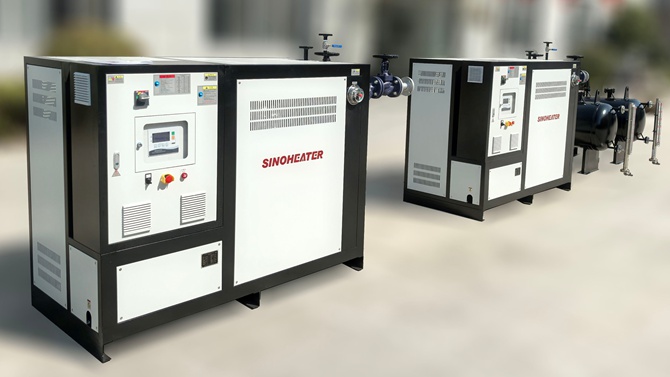
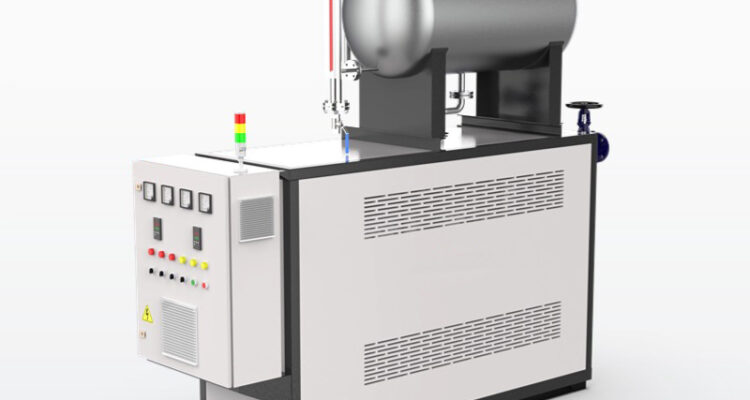
Asphalt plant operations rely on consistent, reliable high-temperature heat to keep aggregate drying, bitumen storage,…
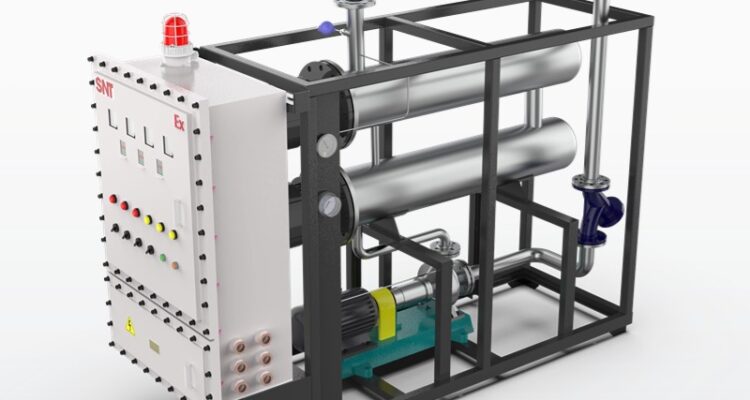
thermal oil heater pressure control
Thermal Oil Heater Pressure Control: What Keeps Your System Safe and Stable
Pressure is the silent variable in every thermal oil heater system. Most operators watch temperature like a hawk but barely glance at the pressure gauge. That is a mistake. Pressure tells you whether the system is breathing properly, whether the expansion tank is doing its job, and whether a catastrophic failure is minutes away.
Controlling pressure in a thermal oil system is not the same as controlling pressure in a steam boiler. The rules are different, the risks are different, and the consequences of getting it wrong are just as serious.
Why Pressure Control Matters in a Thermal Oil System
Thermal oil systems operate at low pressure compared to steam. A typical system runs somewhere between 1 and 6 bar, depending on design. That sounds safe. But here is the thing — the fluid is heated to 300°C or higher. At those temperatures, even a small pressure spike can push the oil past its flash point. Mineral thermal oils flash around 140°C to 180°C. Synthetic oils go higher, but they are not invincible either.
If pressure rises unchecked, the expansion tank cannot absorb the extra volume. The relief valve opens. Fluid vents to atmosphere. You lose oil. You create a fire hazard. You shut down production. All because nobody was watching the pressure.
The real danger is not high pressure itself. It is pressure that behaves unexpectedly — rising when it should stay flat, dropping when it should hold, or oscillating for no clear reason. That is where proper pressure control design and operation come in.
How Pressure Is Actually Controlled in These Systems
There is no single valve or device that handles pressure control. It is a layered approach, and each layer matters.
Nitrogen Blanketing on the Expansion Tank
The expansion tank is the first line of defense. As thermal oil heats up, it expands — sometimes by 10 to 15 percent in volume. The expansion tank gives that extra volume somewhere to go. But an open tank would let air in, and air causes oxidation. Oxidation degrades the oil, forms sludge, and ruins heat transfer efficiency.
So the tank is sealed and pressurized with nitrogen. The nitrogen cushion sits on top of the oil, absorbing expansion without letting oxygen touch the fluid. The nitrogen pressure is set — usually around 0.5 to 1.5 bar above the maximum operating pressure of the system. This is the number that matters most. Set it too low, and air gets in during cooldown. Set it too high, and you restrict the tank’s ability to absorb expansion, which pushes system pressure up.
Checking the nitrogen pressure should be a weekly task, not an annual one. A slow leak in the nitrogen supply will not show up on any alarm. It just silently lets air into the system, and by the time you notice sludge in the strainer, the damage is done.
Relief Valves and Their Role
Every thermal oil system has at least one pressure relief valve, sometimes two. This is not optional. This is not a suggestion. The relief valve is the last thing standing between a controlled system and an uncontrolled one.
The valve is set to open at a pressure slightly above the maximum allowable working pressure of the weakest component in the system — usually the heater or a flange. When it opens, it dumps oil to a safe location, typically a collection tank or drain. Once the pressure drops, it reseats.
Here is what most people get wrong: a relief valve that opens and does not reseat is not a relief valve anymore. It is a leak. And a leak at 300°C is an emergency. Relief valves need to be tested regularly. Some facilities test them monthly by lifting the lever. Others use a calibrated test bench. Whatever method you use, do it. A stuck relief valve gives you a false sense of security that is worse than having no valve at all.
The Pressurization Pump and Makeup Systems
Some systems use a small pressurization pump to maintain the nitrogen blanket on the expansion tank automatically. This pump kicks in when the tank pressure drops below a setpoint — usually during cooldown, when the oil contracts and the nitrogen cushion shrinks.
Without this pump, the tank can go slightly negative during cooldown. That negative pressure pulls air in through any weak seal or vent. Again, air in means oxidation. The pressurization pump keeps the tank slightly positive at all times, even when the system is cold.
Makeup oil systems also tie into pressure control. If the system loses oil — through a small leak, a relief valve discharge, or a drain — the makeup pump adds fresh oil to keep the level correct. But if it adds oil too fast, or if the expansion tank is not sized right, you get a pressure surge. The makeup system and the pressure control system must be coordinated. They are not independent.
Common Pressure Problems and What They Actually Mean
Pressure Keeps Rising Even Though Temperature Is Stable
This usually points to one of three things. First, the nitrogen blanket on the expansion tank has lost pressure. The cushion is too small to absorb expansion, so the extra volume pushes system pressure up. Check the nitrogen pressure with a gauge — do not trust the system readout.
Second, there is water in the system. Water in thermal oil is a disaster. It causes foaming, which makes the pump cavitate. It causes localized hot spots. And it creates steam pockets that spike pressure unpredictably. If your pressure is rising and you cannot find a mechanical cause, test the oil for water content.
Third, the system may have an internal blockage. A partially clogged strainer, a stuck valve, or a buildup of carbon in the heater tubes all restrict flow. The pump keeps pushing, but the fluid has nowhere to go, so pressure climbs. Check the differential pressure across the heater and across any strainers. A rising delta-P is a red flag.
Pressure Drops During Operation
A slow pressure drop usually means a leak somewhere in the loop. It could be a gasket, a flange, a seal on the circulation pump, or a cracked weld. At high temperature, even a pinhole leak will drain the system over days. Find it and fix it before the oil level drops low enough to expose the heater elements, which will then overheat and fail.
A sudden pressure drop is more alarming. It could mean a catastrophic failure — a burst tube, a blown flange, or a ruptured expansion tank. Shut the heater off immediately. Do not restart until you have found the source.
Pressure Oscillates Up and Down
Oscillating pressure is almost always a control problem, not a mechanical one. The burner is cycling too aggressively. The temperature controller is hunting — turning the burner on and off rapidly, which causes the oil to expand and contract in quick pulses. The expansion tank cannot keep up with that rate of change, so pressure swings.
Tune the PID controller on the heater. Slow down the burner cycling. Make sure the temperature deadband is wide enough — typically 5 to 10°C — so the system is not constantly reacting to tiny fluctuations. If the oscillation persists after tuning, check the expansion tank sizing. A tank that is too small for the system volume will always oscillate, no matter how good the control is.
The Connection Between Pressure and Temperature You Cannot Ignore
Pressure and temperature in a thermal oil system are linked, but not in the way most people think. In a sealed system, pressure is primarily a function of temperature — the hotter the oil, the higher the pressure. But the relationship is not linear, and it changes as the oil degrades.
Fresh thermal oil has a predictable expansion curve. As the oil ages, it breaks down. The breakdown products change the fluid’s physical properties. Viscosity shifts. The expansion coefficient changes. A system that ran at 3 bar for years might start creeping toward 4 bar with the same temperature profile, simply because the fluid is no longer behaving the way it used to.
This is why pressure trends matter more than pressure readings. A single reading tells you where you are right now. A trend tells you where you are headed. Log your pressure daily. Compare it to your temperature data. When the two start drifting apart from their historical relationship, something is changing in the fluid, and you need to act before it becomes a problem.
Setting Up a Pressure Monitoring Routine That Actually Works
Do not rely on the control system alarm to tell you about pressure problems. Alarms are reactive. By the time an alarm sounds, you are already dealing with a consequence.
Instead, build a simple daily check into your operator routine. Read the expansion tank nitrogen pressure. Read the system pressure at the pump discharge. Note the differential pressure across the heater. Compare these numbers to yesterday’s numbers. If anything has moved more than 5 to 10 percent, investigate before it becomes a failure.
Monthly, test the relief valve. Quarterly, sample the oil for water, viscosity, and total acid number. Annually, inspect the expansion tank internals for corrosion or sludge buildup. The tank is the most overlooked component in the entire system, and it is doing the most important job.
Pressure control in a thermal oil heater is not glamorous. There is no dramatic valve actuation, no loud alarm, no visible flame. It is quiet, steady, and invisible — until it fails. And when it fails, the results are anything but quiet.
Related Posts