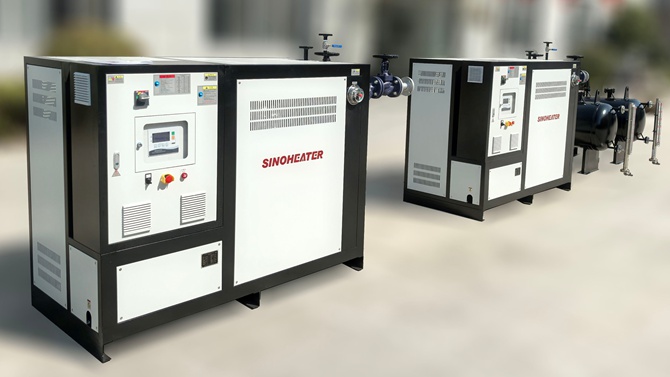
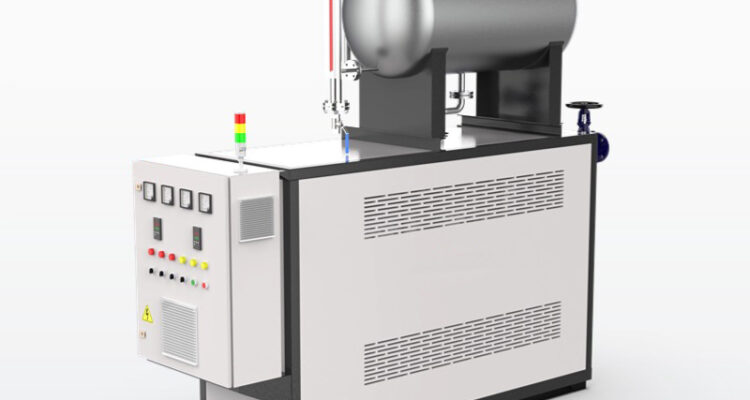
Asphalt plant operations rely on consistent, reliable high-temperature heat to keep aggregate drying, bitumen storage,…
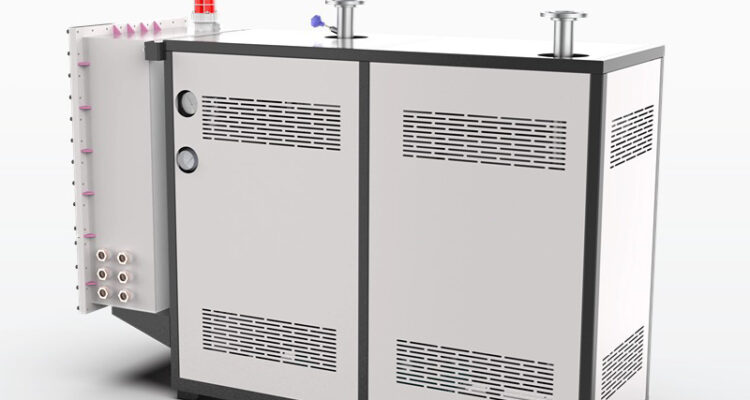
thermal oil heater electric heating system
Electric Thermal Oil Heater System: When No Flame Means Fewer Headaches
Electric thermal oil heaters have no burner, no flame, no flue gas, and no combustion air system. They heat oil using resistance elements or electrode assemblies immersed directly in the thermal oil. For facilities that cannot burn fuel — whether because of emission restrictions, lack of gas access, or space constraints — electric heating looks like an obvious choice. And in many cases, it is. But elthermal oil heater electric heating systemectric systems come with their own set of limitations that catch people off guard if they are not planned for from the start.
How Electric Thermal Oil Heating Works
The principle is simple enough. Electric current passes through a heating element, the element gets hot, and that heat transfers into the thermal oil flowing around it. The oil circulates through the process and returns to the heater, where the cycle repeats.
There are two main element types. Tubular resistance heaters use sheathed metal tubes filled with a resistive alloy — usually something like incoloy or stainless steel. The current flows through the alloy, it heats up, and the tube wall transfers that heat to the oil. These are robust, reliable, and easy to replace.
Electrode heaters work differently. They pass current directly through the oil itself. The oil acts as the resistance. This means the heating rate changes with oil conductivity, which changes with temperature. At cold startup, the oil has low conductivity and the heater produces less power. As the oil warms up, conductivity increases and power rises. This self-regulating behavior is useful but also means you cannot blast the system to temperature quickly.
Immersion heaters — where the element sits directly in the oil without a sheath — are another option. They are common in smaller systems and portable heaters. They are cheap to manufacture but harder to service because you have to drain the oil to replace them.
The Temperature Ceiling Problem
Here is the thing most people do not realize before they buy an electric thermal oil heater: there is a hard temperature limit, and it is lower than what fired heaters can achieve.
Most electric thermal oil heaters max out around 350°C. Some specialized designs push to 400°C, but they are uncommon and expensive. The limit comes from the heating element material. The resistive alloys degrade above certain temperatures. The sheath materials oxidize. The insulation breaks down. Push past the rating and the element fails — sometimes catastrophically.
Fired heaters routinely run at 350°C to 400°C and beyond. If your process needs oil above 350°C, electric is probably not going to work unless you are willing to accept a two-stage system where electric handles the bulk heating and a small fired burner tops it off. That adds complexity and cost, which defeats the purpose of going electric in the first place.
For processes that operate in the 150°C to 300°C range, electric heating is a strong fit. Food processing, plastics, rubber curing, and light chemical applications all sit comfortably within the electric heater’s range.
Efficiency and Operating Cost Reality
Electric heating is nearly 100% efficient at the point of use. Every watt of electricity becomes heat in the oil. There are no flue gas losses, no radiation losses from an open flame, and no excess air carrying heat up a stack. On paper, that sounds unbeatable.
But the cost per unit of heat is where electric loses the argument in most markets. Electricity costs significantly more per kilowatt-hour than natural gas or diesel per unit of energy. In regions where electricity is cheap — hydroelectric power in parts of Canada, Norway, or the Pacific Northwest — electric thermal oil heating can be competitive. In most other places, the operating cost is 2 to 4 times higher than gas fired heating for the same heat output.
That said, efficiency is not the only metric. Electric heaters have no combustion system, which means no burner maintenance, no nozzle replacements, no flue gas cleaning, and no emission permits. For a small to mid-size system running 8 to 16 hours a day, the total cost of ownership can be closer than the fuel cost alone would suggest. You have to factor in the saved maintenance labor, the eliminated compliance costs, and the longer uptime from fewer breakdowns.
Control and Response Characteristics
Electric heaters respond to load changes faster than fired heaters. There is no flame to stabilize, no air-to-fuel ratio to adjust. You change the power input and the oil temperature follows. This makes electric systems excellent for processes that need tight temperature control.
The downside is the modulation range. Many electric heaters operate in discrete steps — full on or full off — rather than smooth modulation. This causes temperature cycling. The oil heats up, the thermostat cuts power, the oil cools, the thermostat turns power back on. Over time, this cycling stresses the heating elements and the thermal oil.
Better systems use solid-state controllers with phase-angle modulation or SCR (silicon controlled rectifier) drives that vary power smoothly. If you are specifying an electric thermal oil heater, ask for continuous modulation, not just on/off control. The difference in oil temperature stability is significant.
Electrode heaters have a different control profile. Because their output depends on oil conductivity, they naturally ramp up as the oil warms. This gives a softer startup curve but makes precise control harder. They are best suited for applications where exact temperature is less critical than gentle, even heating.
Installation and Electrical Requirements
The electrical service for a thermal oil heater is not trivial. A 500 kW electric heater at 480V three-phase draws roughly 600 amps. That requires heavy-duty cabling, a dedicated transformer in many cases, and a switchgear panel rated for the load.
The heater must be properly grounded. All metal parts — the heater vessel, the element housings, the piping — need to be bonded to earth. A fault current passing through thermal oil is a serious hazard. Use ground fault protection on the heater circuit. This is not optional in most electrical codes.
Cable routing matters. The power cables to the heater should not run alongside the thermal oil piping. Heat from the pipes degrades cable insulation over time. Keep them separated, or use high-temperature rated cable where they must cross.
The heater vessel itself must be rated for the operating pressure. Even though there is no combustion, the oil expands when heated and the system pressure rises. The vessel, the expansion tank, and all fittings must be designed for the maximum operating pressure plus a safety margin.
Safety Systems for Electric Heaters
No flame does not mean no risk. Electric thermal oil heaters carry specific hazards that demand specific protections.
Dry run protection is critical. If the circulating pump stops and oil is not flowing past the heating elements, the elements overheat rapidly. The oil in contact with the element cracks, forms sludge, and can ignite if the element gets hot enough. A flow switch interlocked with the heater power must shut off the elements immediately if flow drops below a setpoint. This is the single most important safety device on an electric thermal oil heater.
High limit temperature protection must be independent of the main thermostat. If the thermostat fails stuck-on, the heater will keep running until something gives. A separate high-limit sensor wired to cut power at the maximum oil temperature protects against this. Do not rely on a single control loop for safety.
Low oil level protection on the expansion tank is equally important. If the tank runs dry, air enters the system. Air in the oil causes pump cavitation, which damages the pump and creates hot spots in the heater. A level switch on the expansion tank should prevent the heater from starting if the oil level is too low.
Overpressure protection is required on the expansion tank. If the tank vent blocks or the nitrogen blanket fails, pressure can build. A pressure relief valve on the tank prevents this. Check it regularly.
Maintenance Profile Compared to Fired Systems
Electric thermal oil heaters have fewer moving parts than fired systems. No burner, no fan, no fuel pump, no air damper. That means fewer things to break.
The main maintenance items are the heating elements, the circulating pump, and the oil itself. Elements in tubular heaters last 10,000 to 20,000 hours depending on operating temperature and cycling frequency. At 300°C, expect the lower end of that range. At 200°C, they can last much longer.
When an element fails, you pull it out and drop a new one in. On immersion heaters, you drain the oil first. On tubular heaters with flanged connections, you can often replace them with the system hot, though most operators prefer to shut down and cool the system first.
The oil degrades over time regardless of heat source. Electric heaters do not introduce combustion byproducts, so the oil stays cleaner longer. But thermal cracking still happens at high temperatures. Plan for oil analysis every 6 months and oil replacement every 2 to 4 years depending on operating temperature.
Pump maintenance is the same as any thermal oil system. Check mechanical seals, monitor bearing temperature, and keep the strainer clean. A pump failure in an electric system is just as dangerous as in a fired system — the oil overheats, cracks, and can create a pressure surge.
Where Electric Heating Actually Wins
Electric thermal oil heaters make the most sense in these situations:
When emission permits are impossible or too expensive to obtain. No flue gas means no emissions to measure, report, or limit.
When the heating load is small to moderate. Below 500 kW, electric systems are compact, simple, and cost-effective to install.
When precise temperature control is critical. The fast response of electric elements beats fired burners for tight control loops.
When the facility already has cheap electricity. Hydroelectric or other low-cost power makes the operating economics work.
When noise matters. Fired heaters have burners, fans, and fuel pumps that generate noise. Electric heaters are nearly silent. For labs, clean rooms, or noise-sensitive environments, this matters.
Where Electric Falls Short
Above 350°C, electric heating becomes impractical for most applications. The element materials cannot handle it reliably.
For large heating loads above 1 MW, the electrical infrastructure cost becomes prohibitive in most regions. The transformers, switchgear, and cabling add up fast.
In regions with expensive electricity, the operating cost will dwarf the capital savings compared to a gas fired system. Run the numbers before committing.
For remote locations without reliable electrical service, electric heating is not an option. A fired heater with a diesel tank is more practical.
Sizing an Electric Thermal Oil Heater Correctly
Do not oversize. An oversized electric heater cycles on and off constantly, which kills element life and destabilizes oil temperature. Size the heater for your actual heat load plus a 10% to 15% margin. Not 50% more.
Account for startup time. Electric heaters warm up slower than fired heaters, especially electrode types. If your process needs to reach operating temperature in under an hour, make sure the heater can deliver that. A 500 kW electric heater might take 2 to 3 hours to bring a large oil volume from ambient to 300°C. Plan your startup sequence accordingly.
Consider a two-stage system if you need both fast startup and high temperature. Use a smaller electric heater for the initial warm-up and a fired burner for the final temperature push. This gives you the control benefits of electric with the temperature ceiling of fired heating. It adds cost and complexity, but for demanding applications, it is the most practical compromise.
Related Posts