Asphalt plant operations rely on consistent, reliable high-temperature heat to keep aggregate drying, bitumen storage,…
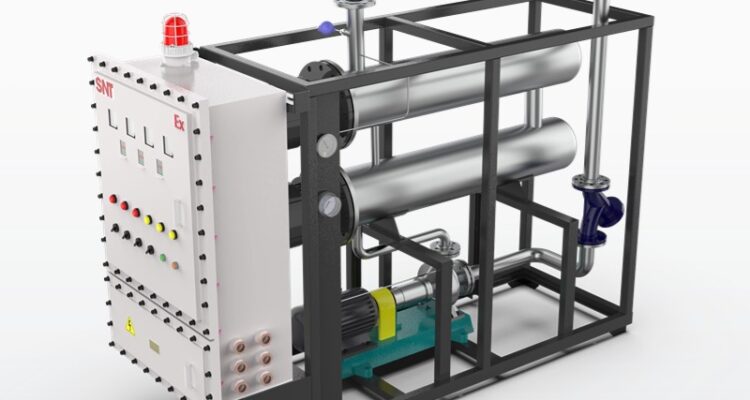
thermal oil heater vertical type
Thermal Oil Heater Vertical Type: The Space-Saving Choice That Demands Respect
Not every plant room has room for a sprawling horizontal heater. Sometimes the ceiling is low, the floor is crowded, or the whole system needs to fit on a skid that ships on a flatbed truck. That is when the vertical thermal oil heater earns its keep. It does the same job as a horizontal unit — heats thermal oil, transfers that heat to a process, and runs for years — but it does it in a fraction of the floor space. The trade-offs are real, though. Tube cleaning is harder, the lower tubes wear faster, and headroom becomes a hard constraint. If you understand those trade-offs before you buy, the vertical type is a smart choice. If you ignore them, it becomes a maintenance headache you did not see coming.
What Actually Changes When You Go Vertical
The core heating principle does not change. Fuel burns, tubes absorb heat, oil circulates, process gets hot. What changes is the geometry of everything around that core.
In a vertical heater, the firebox stands tall instead of long. Tubes run up and down inside a narrow column. The burner sits at the bottom, firing upward through the tube bank. Flue gas rises naturally through the tubes, giving up heat as it climbs. The oil flows upward through the tubes — usually single pass from bottom inlet to top outlet — and heads to the process.
This simple change in orientation ripples through every aspect of the system. The flame behavior is different. The flue gas flow pattern is different. The way tubes foul, wear, and fail is different. Even the way oil drains on shutdown changes. A vertical heater is not a horizontal heater turned sideways. It is a different machine with different strengths and different weaknesses.
Tube Layout and How Oil Moves Through a Vertical Heater
Single Pass Versus Multi Pass in Vertical Designs
Most vertical thermal oil heaters use a single pass tube layout. Oil enters at the bottom of the tube bank, flows straight up through all the tubes, and exits at the top. No turns, no U-bends, no return headers. The path is simple and direct.
That simplicity is the main advantage. Single pass means low pressure drop. The pump does not have to fight against flow reversals or sharp bends. For a given heating duty, a single pass vertical heater needs a smaller pump than a multi pass design. That saves money on the pump, saves electricity on pump operation, and reduces mechanical seal wear.
The downside is limited heating surface per unit of firebox volume. Because the tubes run straight up, you cannot pack as many rows of tubes into a vertical firebox as you can into a horizontal one. Each row takes up vertical space, and vertical space is the one thing you are trying to save. For high-capacity applications above 2 MW, a single pass vertical heater can get uncomfortably tall.
Multi pass vertical designs solve this by folding the oil path back on itself. The oil goes up through one set of tubes, hits a return header at the top, comes back down through a second set, and exits at the bottom. This doubles the tube surface in the same firebox height. The trade-off is pressure drop — roughly double that of single pass — and more complex piping inside the heater.
Coiled Tube Configurations in Vertical Heaters
Some vertical heaters use coiled tubes instead of straight tubes. The oil flows through a spiral or helical coil inside the firebox. This packs more heating surface into a shorter vertical space, which sounds ideal for a compact design.
Coiled tubes work well in electric vertical heaters where the heating element sits inside the coil. They also appear in some fired designs where headroom is extremely tight. The problem is pressure drop. Oil flowing through a tight coil fights friction at every turn. For systems above 500 kW, the pressure drop can eat into your pump capacity and reduce flow velocity inside the tubes.
Lower flow velocity means higher oil film temperature on the tube wall, which means faster thermal cracking of the oil. That is the opposite of what you want. Coiled tubes also resist cleaning. A mechanical brush or high-pressure jet cannot navigate a coil the way it runs through a straight pipe. If you use coiled tubes, plan for chemical cleaning every few months instead of mechanical cleaning every year.
How the Burner Behaves Differently in a Vertical Heater
Bottom-Fired Burner Dynamics
The burner in a vertical heater sits at the bottom of the firebox, usually on the front wall. The flame projects upward into the tube bank. This is the most common configuration and it works, but the flame behavior is not the same as in a horizontal heater.
In a horizontal heater, the flame sweeps across the tubes laterally. The heat distributes relatively evenly across the tube bank. In a vertical heater, the flame rises upward through the center of the tube bank. The lower tubes get blasted with the hottest gas. The upper tubes get cooler gas that has already given up much of its heat.
This creates a temperature gradient along the tube length. The bottom tubes run hotter than the top tubes. Over time, this means the bottom tubes foul faster, thin faster, and fail first. It is not a design defect. It is physics. The flame is hottest at the source, and the gas cools as it rises.
Some designs address this with multiple burners at different heights. A lower burner handles the base load, and an upper burner kicks in when more heat is needed. This distributes the heat more evenly across the tube bank and extends overall tube life. But it adds cost and complexity to the burner system.
Flame Impingement Risks
Flame impingement is a bigger concern in vertical heaters than in horizontal ones. In a horizontal heater, the flame sweeps across the tubes. In a vertical heater, the flame rises through the center of the tube bank. If the burner is not tuned correctly, the flame can hit the tubes directly instead of flowing between them.
Direct flame impingement creates hot spots on the tube wall. Those hot spots accelerate tube metal fatigue and can cause premature failure. The burner nozzle must be angled correctly, and the flame shape must be tuned to avoid tube contact. This tuning is more critical in a vertical heater than in a horizontal one because there is less room for error in a narrow firebox.
Why People Choose Vertical Heaters in the First Place
Floor Space Is the Driver
The number one reason people specify vertical thermal oil heaters is floor space. A vertical heater can reduce the footprint by 40% to 60% compared to a horizontal heater of the same capacity. Instead of spreading tubes across a wide firebox, you stack them in a tall, narrow column.
This matters a lot in real-world installations. Rooftop systems have limited floor area and strict structural load limits. A vertical heater concentrates the load into a smaller footprint, which can be easier to support structurally than a long, wide horizontal heater. Skid-mounted systems benefit too — a narrower skid fits on a standard truck bed instead of requiring an oversize load permit.
Retrofit projects in existing plant rooms often have no choice. If the available space is 3 meters wide and 4 meters long, a horizontal heater will not fit. A vertical heater might squeeze in. The constraint is real, and the vertical type is the answer.
Natural Draft Works Better in Vertical Designs
Vertical heaters can operate on natural draft more easily than horizontal ones. Because the flue gas rises naturally, you do not always need a forced draft fan. This eliminates the fan, the motor, the controls, and the electricity to run them.
For small heaters under 500 kW, natural draft vertical designs are simple and reliable. No fan means no fan failure, no fan noise, no fan maintenance. The catch is that natural draft only works when the flue gas temperature is high enough to create sufficient buoyancy. At low fire rates or with low-temperature fuels, the draft may not be strong enough. Forced draft is more reliable but adds complexity.
Oil Drainage on Shutdown
Here is a benefit that people overlook. When a vertical heater shuts down, the oil drains back down through the tubes by gravity. The tubes empty faster than in a horizontal heater where oil can pool in low spots.
Faster drainage means less oil sitting in hot tubes after shutdown. Oil that sits in tubes above 300°C degrades rapidly. Every minute that oil sits in a hot tube, it forms sludge and coke. A vertical heater that drains in 10 minutes is kinder to the oil than a horizontal heater that takes 30 minutes. Over thousands of shutdown cycles, this adds up to longer oil life and fewer oil changes.
The Problems Nobody Warns You About
Tube Cleaning Is a Nightmare
This is the biggest complaint about vertical heaters. The tubes run straight up, and in most designs, you cannot pull a cleaning tool through them from top to bottom the way you can in a horizontal heater.
In a horizontal heater, you push a brush or a water jet through the tube from one end to the other. Gravity helps. The tool runs smooth. In a vertical heater, gravity works against you. The cleaning tool tends to fall rather than move smoothly through the tube. You end up using lighter tools, shorter strokes, and more frequent cleanings.
For fired systems where tube fouling is a concern — diesel, biomass, heavy oil — this is a serious problem. A vertical heater running on dirty fuel may need cleaning every 4 to 6 weeks. A horizontal heater on the same fuel might go 3 to 6 months between cleanings. If your maintenance team cannot handle that frequency, the vertical heater will foul faster than you can clean it.
Lower Tubes Die First
The bottom tubes in a vertical heater always see more heat than the top tubes. The flame is hottest at the burner, and the flue gas cools as it rises. This means the lower tubes foul faster, thin faster, and fail first.
Over time, you end up replacing the lower tubes more often than the upper ones. This is not a design flaw. It is thermodynamics. But it means your maintenance schedule must account for uneven tube life. Inspect the lower tubes more frequently. Keep spare tubes on hand. Budget for more frequent tube replacements than you would with a horizontal heater.
Some designs use baffles inside the firebox to redirect flue gas upward more evenly. Others use staged burners to distribute the heat. These help, but they do not eliminate the problem. The lower tubes will always wear faster.
Headroom Is a Hard Limit
A vertical heater is tall. For a 1 MW system, the firebox may be 4 to 6 meters tall. For a 2 MW system, it can be 7 to 9 meters. This creates headroom requirements that may not exist in your plant room.
If the ceiling is too low, you cannot install a vertical heater. Full stop. This is why vertical heaters are common on rooftops — there is no ceiling — but rare in basement-level plant rooms. Measure your available headroom before specifying a vertical type. Do not assume it will fit. Measure it.
The tall firebox also creates access issues. The top of the tube bank may be 5 meters above the floor. Inspecting those tubes requires a ladder or a platform. If your maintenance team is not equipped to work at height, the vertical heater will not get the maintenance it needs.
Installation Mistakes That Haunt Vertical Heaters Later
Skipping Expansion Loops on Short Pipe Runs
Even a 1-meter pipe run at 300°C grows several millimeters from cold to hot. Without an expansion loop, that growth has nowhere to go. The pipe buckles, the flange gasket cracks, and you get a leak.
Every pipe run on a vertical heater skid needs an expansion loop or bellows. This includes the short runs between the heater, pump, and expansion tank. Do not skip them because the run is short. Short runs at high temperature still grow.
Placing the Expansion Tank on the Side
The expansion tank must sit at the highest point of the entire system. On a vertical heater skid, this usually means on top of the heater or on a riser above the heater outlet. If you place the tank on the side of the skid, it may not be the highest point, which defeats its purpose.
A tank that is not the highest point cannot vent properly. Air accumulates in the system. The pump cavitates. Hot spots form in the heater. The whole system becomes unstable. Put the tank on top.
Forgetting to Insulate the Skid Piping
The pipes between the heater, pump, and tank carry hot oil. If they are not insulated, you lose heat, burn operators, and create a fire hazard near the control panel. Insulate every pipe on the skid that carries oil above 100°C. Use mineral wool or calcium silicate insulation with a weatherproof jacket if the skid sits outdoors.
Maintenance Reality Check for Vertical Heaters
How Often to Inspect Tubes
Inspect tubes in a vertical heater every 3 months if you run dirty fuel. Every 6 months if you run clean gas. Use a borescope to look inside from the top. Use an ultrasonic thickness gauge to measure remaining wall thickness.
Pay special attention to the lower tubes. They wear faster. If the lower tubes are below minimum wall thickness, replace them before they fail. A tube failure in a vertical heater dumps hot oil downward onto the burner. That is a fire you do not want to deal with.
Burner Access Matters More Than You Think
The burner on a vertical heater sits at the bottom of a tight firebox. Removing it for nozzle replacement or tuning is harder than on a horizontal heater. If the firebox does not have removable access panels, you will skip maintenance because it is too difficult.
Skipped maintenance leads to poor combustion. Poor combustion leads to soot. Soot leads to tube fouling. Tube fouling leads to unplanned shutdowns. Design the firebox with removable panels. Make the burner accessible. If you cannot reach it easily, you will not maintain it properly.
Clean the burner nozzle every 500 operating hours. Check the flame pattern every 250 hours. A bad flame pattern means uneven heat distribution, which means uneven tube wear, which means premature tube failure.
Oil Change Intervals
Change the oil every 2 to 4 years depending on operating temperature. Test the oil every 6 months. Look for viscosity increase, acid number rise, and sludge formation.
Vertical heaters on dirty fuel may need more frequent oil changes because the tubes foul faster and the oil degrades quicker. Do not extend oil change intervals on a vertical heater running biomass or heavy oil. The oil will crack faster than you expect.
When Vertical Type Is the Right Call and When It Is Not
Go vertical when floor space is the primary constraint. Rooftop installations, tight plant rooms, skid-mounted systems that need to ship on a standard truck — these are where vertical heaters shine.
Go vertical when the heating load is under 2 MW. Above that, the heater gets too tall and the maintenance burden becomes unacceptable.
Go vertical when the fuel is clean. Gas fired vertical heaters work well because tube fouling is minimal, so the harder-to-clean tubes are not a problem.
Do not go vertical when the fuel is dirty. Diesel, biomass, and heavy oil foul tubes fast. A vertical heater with dirty fuel is a recipe for chronic fouling and high maintenance costs.
Do not go vertical when headroom is limited. If your ceiling is under 4 meters, measure carefully. A vertical heater may not fit.
Do not go vertical when your maintenance team cannot work at height. If the top of the tube bank is 5 meters up and you do not have proper access equipment, the heater will not get the maintenance it needs.
The vertical thermal oil heater is a smart solution when space is the problem and the application matches its strengths. It is a poor choice when people pick it for space reasons and then ignore the maintenance realities. The tubes are harder to clean, the lower tubes wear faster, and the headroom requirements are non-negotiable. Accept those trade-offs at the design stage, budget for the extra maintenance, and the vertical type delivers reliable heat in a footprint that horizontal heaters simply cannot match.
Related Posts