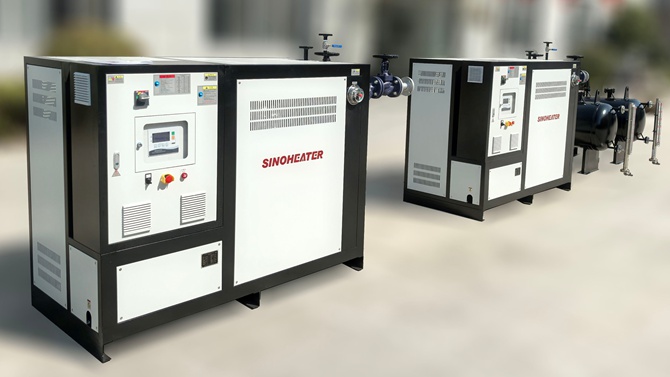
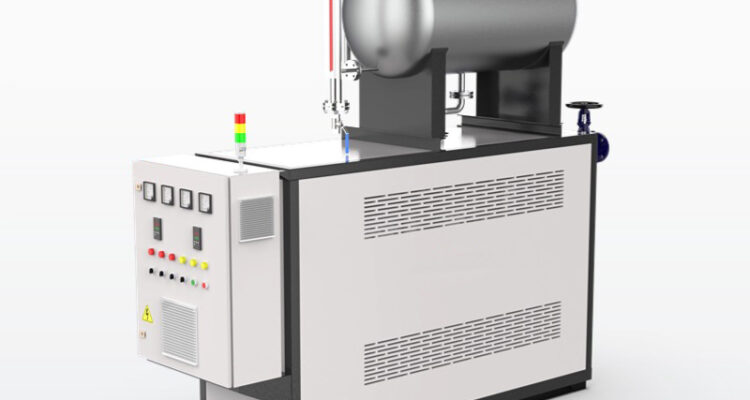
Asphalt plant operations rely on consistent, reliable high-temperature heat to keep aggregate drying, bitumen storage,…
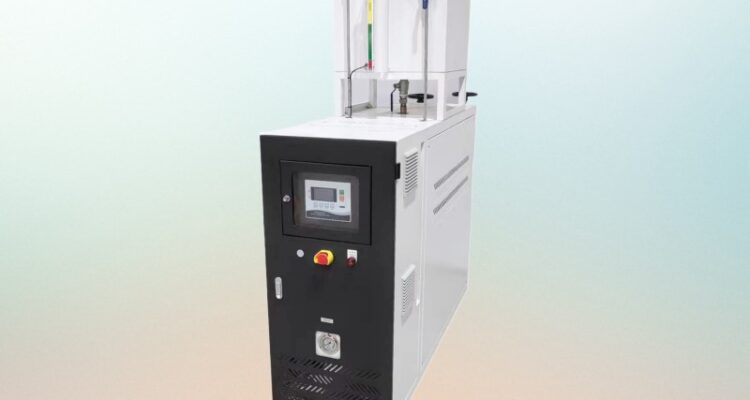
thermal oil heater industrial heating technology
Industrial thermal oil heater technology provides a distinct approach to process heating by circulating a specialized heat transfer fluid at high temperatures without phase change. This method offers precise temperature control and operational safety for a wide range of manufacturing and chemical processes. The system’s core principle relies on a closed-loop circuit where thermally stable oil absorbs energy from a burner or electric heater and releases it to the process through heat exchangers, before returning to be reheated. This continuous cycle enables consistent, high-temperature heat delivery where steam systems may face pressure limitations.
Closed-Loop Design for High-Temperature Stability and Safety
A defining feature of thermal oil systems is their pressurized, liquid-phase operation, which eliminates the risks associated with high-pressure steam. This design principle underpins their application in industries requiring temperatures typically between 250°C and 400°C.
Operating without phase change at elevated temperatures
Unlike steam boilers, thermal oil remains in a liquid state throughout the heating cycle, even at temperatures well above the boiling point of water. This is achieved by pressurizing the closed loop just enough to prevent the oil from vaporizing. The absence of a phase transition (liquid to gas) removes the need for high-pressure vessels and complex steam traps, reducing system complexity and inherent safety risks associated with pressurized steam.
Delivering consistent thermal energy through forced circulation
Heat is transferred by mechanically pumping the oil through the system. The oil is heated in a dedicated heater and then pumped to one or multiple user points, such as reactors, presses, or drying drums. At each point, the oil flows through a shell-and-tube or plate heat exchanger, transferring its sensible heat to the process before returning to the heater at a lower temperature. This forced circulation ensures uniform temperature distribution and rapid response to process heat demand changes.
Advanced System Components for Efficient Heat Management
The reliability and efficiency of a thermal oil heating system depend on the integrated performance of several key components beyond the heater itself.
High-temperature centrifugal pumps with mechanical seals
Circulation pumps are engineered to handle the viscosity and temperature of thermal oils. They typically feature robust mechanical seals or gland packing designed for high-temperature service and are often equipped with cooling jackets to protect bearing assemblies. Proper pump selection and maintenance are critical to maintaining the required flow rate, which directly impacts heat transfer efficiency and prevents oil degradation from localized overheating.
Expansion tanks for fluid volume management and degassing
A properly sized and positioned expansion tank is essential. It accommodates the volumetric expansion of the oil as it heats up, maintaining a stable system pressure. The tank also serves as a venting point for any entrained air or low-boiling-point components released from the hot oil, a process known as degassing. This prevents vapor locks and ensures smooth pump operation. The tank is typically nitrogen-blanketed to minimize oxidative degradation of the oil at high temperatures.
Application-Specific Advantages in Process Industries
The technology’s characteristics make it particularly suitable for processes where precise, uniform, and high-temperature heat is required without direct contact or contamination.
Enabling precise temperature control for sensitive chemical processes
In chemical manufacturing, reactors often require precise temperature profiles to control reaction rates and product quality. Thermal oil systems can provide heating (and cooling, if configured with a cooling circuit) with temperature control accuracy within ±1°C to ±3°C. The oil’s stability allows for isothermal conditions, which is crucial for batch processes like polymerization, distillation, or synthesis where thermal runaway must be prevented.
Providing uniform indirect heat for bulk material processing
Industries such as composite materials, asphalt production, and food processing utilize thermal oil to heat large presses, rollers, or drying cylinders. The oil circulates through jackets or internal channels within these machines, providing uniform surface temperature. This indirect method prevents hot spots, ensures consistent product quality (e.g., in laminating or curing), and eliminates the risk of product contamination from combustion gases, which is a concern with direct-fired methods.
Related Posts